The Best Way to Use the Hip Thrust Machine to Build Your Glutes
Instructions (Floating-Bar Hip Thrust Machine)
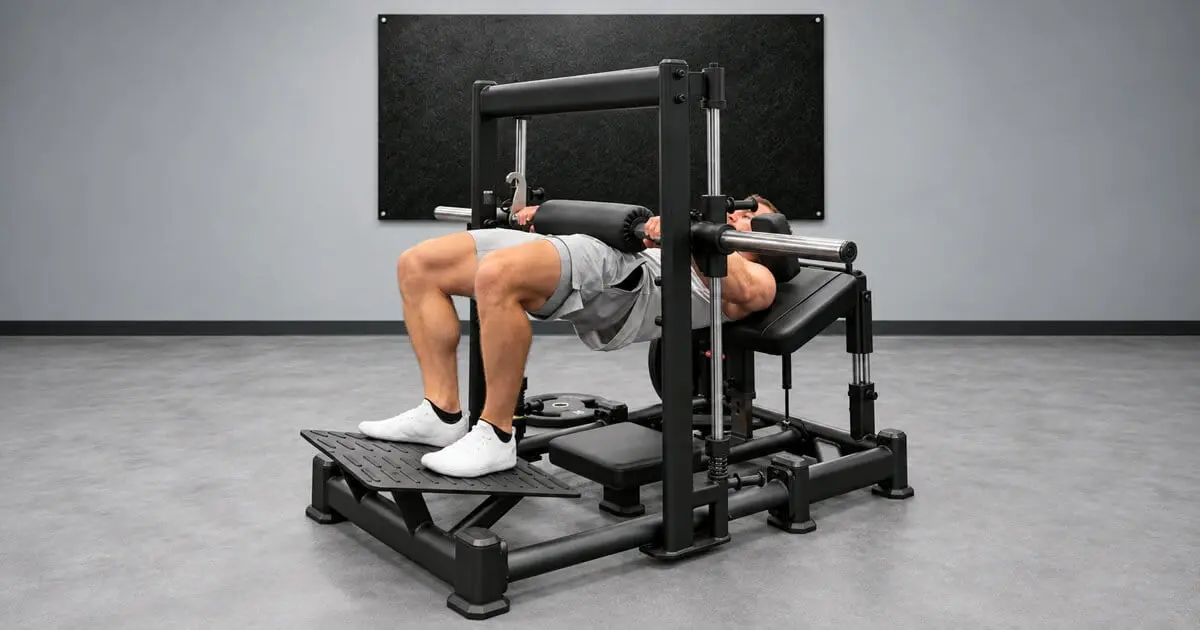
Sit with your upper back against the padded support of the machine and place your feet on the footplate. Adjust your foot position so your feet are nearly vertical and your knees are bent at about 90 degrees at the top of each rep. Grab the bar and rotate your wrists backward (like revving a motorcycle), then slightly lift your hips to release the safety hooks supporting the weight. Lower your hips until your glutes lightly touch the floor (or as low as possible without letting your lower back lose contact with the pad), then drive your hips upward through your heels until your torso and thighs form a straight line. Hold this position briefly, then reverse the movement and return to the starting position. Place the belt across the top of your hips and secure it according to the machine’s instructions.
Wellness Alert
 New Depression Subtype Linked to Body Clock Identified
 AI Facial Analysis Predicts Cancer Survival Rates
 Optimizing Daily Habits for Improved Digestive Function
 Rapport Therapeutics Reports Positive Phase 2 Results for RAP-219 in Bipolar Mania
Instructions (Lever Hip Thrust Machine)
Release the weight from its support (exact method depends on the machine) and hold the belt or handles, or place your hands on your knees.
Sit with your upper back against the pad and place your feet on the platform. Adjust so your knees are bent around 90 degrees when hips are fully extended. Secure the belt across your hips and tighten it if adjustable. Push through your heels to lift your hips until your body forms a straight line from shoulders to knees. Squeeze your glutes hard at the top. Lower under control until your glutes nearly touch the seat, then repeat. Keep tension on the glutes throughout by not letting the belt go slack.
Expert Tips
The two most common hip thrust machine styles are floating-bar and lever types. On a floating-bar machine (first video set shown above), you push your hips against a moving bar that travels up and down and toward or away from you. On a lever machine, a thick belt secures you to a weighted lever that follows a fixed path (second video set shown above). If using a lever hip thrust machine and the belt is adjustable, try tightening it downward so your glutes stay under tension throughout the rep. If the belt is too loose, you’ll unnecessarily shorten the range of motion, making the exercise less effective. Squeeze your glutes as hard as possible at the top of each rep, lower the weight under control, pause briefly at the bottom of the rep, and then contract your glutes again as hard as possible to initiate the next rep.
Mike's Take
Check your position with a light weight before starting your first hard set. Adjust foot placement and, if the machine allows, the back pad, so you can keep your upper back supported and drive your hips without slipping position. Avoid overarching your lower back, especially at the top of each rep, where you might be tempted to aggressively crank your spine. Instead, brace your core and keep your torso rigid. During each rep, never stop driving your hips upward. Or, if you’re trying to build your glutes, you can do it as the first exercise in your workout. A good standard is 3 sets of 6–8 reps. Take each set 1–2 reps shy of failure—the point where you can’t move the weight with good form despite maximal effort—and rest 2–3 minutes between sets.
The machine hip thrust is my favorite glute exercise. It efficiently isolates the glute muscles (primarily the gluteus maximus, the largest butt muscle), trains them through a full range of motion, lets you take sets close to or to failure safely, and allows you to add weight in small increments over time. It’s also easier to set up, learn, and perform than the barbell version. If you choose to include the hip thrust machine in your program, use whatever you have available. If you have a choice, I generally prefer the floating-bar style of the hip thrust machine shown in the first video demo set above. It lets you move your hips in whatever path feels most comfortable and effective for maximal glute contraction. That said, lever-style hip thrust machines work well for most people.
Machine Hip Thrust Alternatives
Although hip thrusts are a fantastic glute exercise, sometimes you hear people talk about hip thrusts as if they’re the only good exercise for building glutes, and it’s easy to overlook other effective options.
3 Machine Hip Thrust Workouts
Barbell hip thrusts remain the gold standard for glute development when machines aren’t available. Dumbbell hip thrusts work well for lighter loads or home training. Resistance band hip thrusts add constant tension and are great for activation or finisher sets. Single-leg hip thrusts on a bench or floor increase glute engagement and help correct imbalances. Cable pull-throughs mimic the hip hinge pattern and target the posterior chain effectively.
Workout 1: Strength Focus – 4 sets of 5 reps with heavy weight, rest 3 minutes. Workout 2: Hypertrophy Focus – 3 sets of 10–12 reps, rest 90 seconds. Workout 3: Endurance and Pump – 2 sets of 20 reps with moderate weight, rest 60 seconds, plus 15-second glute squeeze at top of each rep.
More Leg and Glute Exercises
Include Romanian deadlifts, Bulgarian split squats, walking lunges, step-ups, and seated abductions in your routine for balanced lower-body development. Pair hip thrusts with squats and deadlifts for maximum glute and leg growth.
More stories: